
Sunday, June 22, 2014
To the Moon
I just discovered that NASA (in cooperation with ASU, incidentally) has a website full of high resolution photos from their missions. Cool! You can even download the raw photo files if you want. I'm going to print one of the Gemini mission photos for the baby's room.

Sunday, March 23, 2014
Writing and Mental Health
Here's an interesting article/time-traveling website from the 90s that I found about how to use writing to improve your mental health. Sounds worth trying!
Sunday, March 9, 2014
Common Core Critical Words List
This post's primary purpose is to make a pinnable link to a resource I found listing the 55 "critical words" that are listed in the common core appendix B.
Here's the fabulous picture that I've selected so that I can pin it. Ha.

Here's the fabulous picture that I've selected so that I can pin it. Ha.

Saturday, November 9, 2013
who killed cock robin?
holy moly! who killed cock robin is one edgy picture book. spoiler alert: it was the sparrow, with his arrow! here's one of many fantastic illustrations:

who saw him die? i, said the fly. on the next page they ask who caught his blood. children were apparently made of sterner stuff in 1865.

who saw him die? i, said the fly. on the next page they ask who caught his blood. children were apparently made of sterner stuff in 1865.
My House: Where Projects Go to Die
This morning whilst perusing the blogs, I saw this house tour on apartment therapy (really nice, btw!). I noticed their industrial-looking dining table and it made me think about my dining table project. Whatever happened to that, you ask? Here's the sad state of affairs on that one:

See how it's mocking me? Just sitting there, gigantic and unfinished. (On the plus side, the cats really love its current location because it's great for monitoring us when we're in the living room.)
We hired a welder to make the base, and I bought some reclaimed lumber that I was going to use to "simply" make the top, using Daniel's DIY countertop method. However, I have come to realize that it's going to be a huge pain in the ass, and realistically, beyond my abilities and access to tools. The joists are not de-nailed as Rebuilding Exchange claimed, and a few of them are warped, which would make it nearly impossible to form them into a flat table top without planing them (and honestly I don't even know if a planar can fix that—I just don't have whole lot of knowledge about woodworking.) Not to mention, my time and ability to do projects right now is pretty limited. So, we've decided to hire a carpenter to make the tabletop for us. Know any good carpenters in Chicago?

See how it's mocking me? Just sitting there, gigantic and unfinished. (On the plus side, the cats really love its current location because it's great for monitoring us when we're in the living room.)
We hired a welder to make the base, and I bought some reclaimed lumber that I was going to use to "simply" make the top, using Daniel's DIY countertop method. However, I have come to realize that it's going to be a huge pain in the ass, and realistically, beyond my abilities and access to tools. The joists are not de-nailed as Rebuilding Exchange claimed, and a few of them are warped, which would make it nearly impossible to form them into a flat table top without planing them (and honestly I don't even know if a planar can fix that—I just don't have whole lot of knowledge about woodworking.) Not to mention, my time and ability to do projects right now is pretty limited. So, we've decided to hire a carpenter to make the tabletop for us. Know any good carpenters in Chicago?
Monday, October 14, 2013
teaching vocabulary
Hi readers. Just a forewarning: this is a bit of a brain dump about vocabulary instruction. I have been thinking a bit about vocabulary instruction, explicit and otherwise. The curriculum we have at school, while it has a decent word list, has really cheesy stories that are inauthentic, don't have a very familiar context for the kids we teach, and the vocabulary words are isolated within the context of vocabulary instruction. We have been puzzling over a more authentic way to teach vocabulary, mainly thinking about better read-alouds, and teaching fewer words that we (and students) can use throughout the day and can be incorporated into a variety of activities and disciplines.
Here's what I currently know about vocabulary and vocabulary instruction:
There's a huge gap in vocabulary before kids enter school based on their socio-economic status.
Most vocabulary (approximately 80%) is learned through someone providing an explanation of what a word means. So, merely reading a wide variety of texts will not automatically increase a child's vocabulary. They need someone (a parent, a teacher, a text) to provide an explanation of what a word means.
Schools aren't doing a very good job of teaching vocabulary, especially in primary grades.
In thinking about teaching vocabulary, it's helpful to think about three tiers of vocabulary. The first tier is everyday verbal vocabulary. The second tier is academic vocabulary, which is basically just words that appear more often in print than in speech but are fairly common words. (These two categories are obviously relative to the speaker.) The third tier is domain-specific language. This is specialized language used to describe very specific ideas in a particular discipline, such as addition, chrysalis, or viscosity.
One really important aspect of understanding word meanings is understanding word relationships. Synonyms, antonyms, shades of meaning such as the degree of strength a word indicates, are all really important aspects of understanding a word. Understanding how words are related through a root helps children be flexible with how they use and understand words.
Categorizing and grouping words by different commonalities is also really important in developing semantic maps of words. Some words describe parts of whole. Some words are related by a common theme, setting, or idea. Thinking about these relationships and organizing words helps build the semantic maps that are a part of truly understanding words. I haven't used concept maps much in my teaching, and when I have it's been mostly in science and math, but it seems like a really powerful (and in hindsight, obvious) tool for teaching vocabulary.
Here are a few resources I found for teaching vocabulary:
http://www.aft.org/newspubs/periodicals/ae/spring2001/biemiller.cfm
http://www.berkeleyschools.net/wp-content/uploads/2013/05/BUSD_Academic_Vocabulary.pdf
Here's what I currently know about vocabulary and vocabulary instruction:
There's a huge gap in vocabulary before kids enter school based on their socio-economic status.
Most vocabulary (approximately 80%) is learned through someone providing an explanation of what a word means. So, merely reading a wide variety of texts will not automatically increase a child's vocabulary. They need someone (a parent, a teacher, a text) to provide an explanation of what a word means.
Schools aren't doing a very good job of teaching vocabulary, especially in primary grades.
In thinking about teaching vocabulary, it's helpful to think about three tiers of vocabulary. The first tier is everyday verbal vocabulary. The second tier is academic vocabulary, which is basically just words that appear more often in print than in speech but are fairly common words. (These two categories are obviously relative to the speaker.) The third tier is domain-specific language. This is specialized language used to describe very specific ideas in a particular discipline, such as addition, chrysalis, or viscosity.
One really important aspect of understanding word meanings is understanding word relationships. Synonyms, antonyms, shades of meaning such as the degree of strength a word indicates, are all really important aspects of understanding a word. Understanding how words are related through a root helps children be flexible with how they use and understand words.
Categorizing and grouping words by different commonalities is also really important in developing semantic maps of words. Some words describe parts of whole. Some words are related by a common theme, setting, or idea. Thinking about these relationships and organizing words helps build the semantic maps that are a part of truly understanding words. I haven't used concept maps much in my teaching, and when I have it's been mostly in science and math, but it seems like a really powerful (and in hindsight, obvious) tool for teaching vocabulary.
Here are a few resources I found for teaching vocabulary:
http://www.aft.org/newspubs/periodicals/ae/spring2001/biemiller.cfm
http://www.berkeleyschools.net/wp-content/uploads/2013/05/BUSD_Academic_Vocabulary.pdf
Wednesday, September 25, 2013
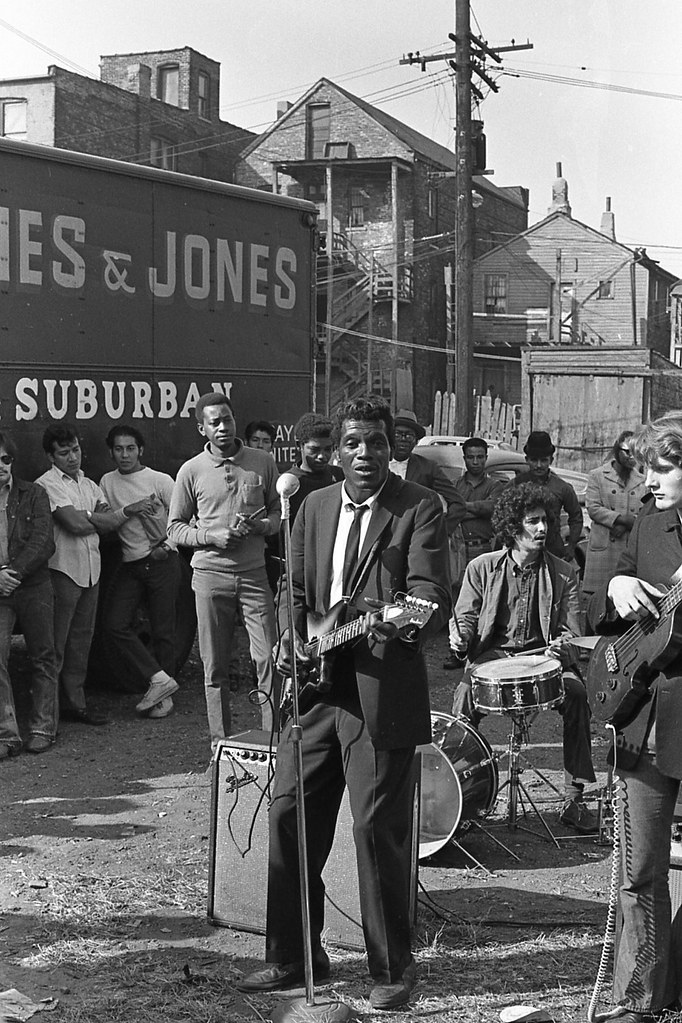
Maxwell Street Market
I recently watched a couple documentaries on the Maxwell Street Market—Cheat You Fair: The Story of Maxwell Street, and then And This Is Free: The Life and Times of Chicago's Legendary Maxwell Street. Both were very interesting. (This is a topic of fascination for me, and going to the new Maxwell Street Market on Des Plaines is probably my favorite thing to do in Chicago).

Cheat You Fair is mostly about the market getting shut down, which is a pretty disheartening story. Another reminder that Chicago is really corrupt, and that poor people's interests are rarely considered in the face of government or business development. There were a lot of interesting discussions about gentrification, UIC's location as a buffer between the loop and black communities on the west side, and corruption in city hall. There was also an attempt to piece together the larger history of UIC's development, but I think that's probably its own (fascinating and sordid) topic. In general, it seems like this location was chosen for the university because it was occupied by poor people with very little political capital. That area has basically been rebuilt from scratch over the last 20-30 years, accompanied by rapid gentrification.

And This Is Free is two films put together. One was made in 1965, and is almost completely without narration and all the footage was shot in that year. It's awesome. The other is a history going back a bit further, focusing more on the Jewish community and their experience and their role in shaping what the market eventually became. There's a lot of great footage in there: it looks like it's from as early as the thirties. There were a lot of anecdotes from people who grew up selling things as children on Maxwell Street, and the overwhelming lesson they all got from that experience was how to work with people. Makes sense I guess. There was also this great anecdote about a guy whose family had a butcher shop on 14th and Halsted, and the way he got meat to the store was he took the Halsted streetcar to the stockyards on 43rd and Halsted, and then he got a half a cow. Then he put some wax paper on his back and put the cow on the wax paper, and then boarded the streetcar north back to 14th street. (How many lawsuits can you count in that anecdote?) On the whole it was a really interesting documentary. Less informative perhaps than Cheat You Fair, but lots more interesting interviews and footage.
It's a damn shame they shut down the market. Glad it's been revived, but the new development in the University Village area could easily have accommodated some preservation of that community and cultural history.
Cheat You Fair is mostly about the market getting shut down, which is a pretty disheartening story. Another reminder that Chicago is really corrupt, and that poor people's interests are rarely considered in the face of government or business development. There were a lot of interesting discussions about gentrification, UIC's location as a buffer between the loop and black communities on the west side, and corruption in city hall. There was also an attempt to piece together the larger history of UIC's development, but I think that's probably its own (fascinating and sordid) topic. In general, it seems like this location was chosen for the university because it was occupied by poor people with very little political capital. That area has basically been rebuilt from scratch over the last 20-30 years, accompanied by rapid gentrification.

And This Is Free is two films put together. One was made in 1965, and is almost completely without narration and all the footage was shot in that year. It's awesome. The other is a history going back a bit further, focusing more on the Jewish community and their experience and their role in shaping what the market eventually became. There's a lot of great footage in there: it looks like it's from as early as the thirties. There were a lot of anecdotes from people who grew up selling things as children on Maxwell Street, and the overwhelming lesson they all got from that experience was how to work with people. Makes sense I guess. There was also this great anecdote about a guy whose family had a butcher shop on 14th and Halsted, and the way he got meat to the store was he took the Halsted streetcar to the stockyards on 43rd and Halsted, and then he got a half a cow. Then he put some wax paper on his back and put the cow on the wax paper, and then boarded the streetcar north back to 14th street. (How many lawsuits can you count in that anecdote?) On the whole it was a really interesting documentary. Less informative perhaps than Cheat You Fair, but lots more interesting interviews and footage.
It's a damn shame they shut down the market. Glad it's been revived, but the new development in the University Village area could easily have accommodated some preservation of that community and cultural history.
Subscribe to:
Posts (Atom)